

Categoría: Latin America
-
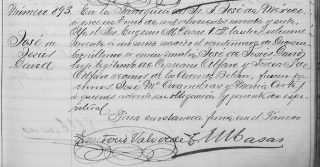
Siqueiros’ Three Names
Guillermina Guadarrama Peña David Alfaro Siqueiros’ actual name was José de Jesús David.[1] This wasn’t unusual in the 19th century; children were given more than two names, even up to six or seven. He was baptized in the church of San José, on January 11, 1897, near the home adress on his certificate…
-
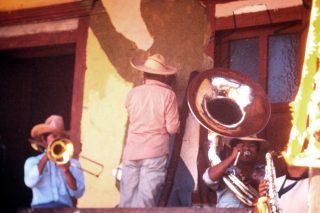
The Community Art of Taller de Investigación Plástica
Guillermina Guadarrama Peña The Taller de Investigación Plástica (TIP) was a multidisciplinary artistic collective born in the upheavals of the 1970’s, a time of major social movements. It was the first group to produce community art in Mexico, a kind of public art that emerged when “individualism and art for art’s sake began…
-
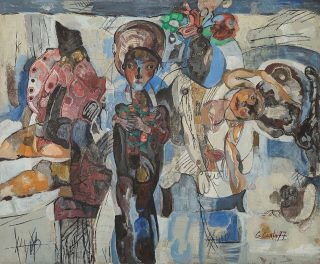
Un mismo amor
Alberto Híjar Serrano Without him knowing, or quoting from it, the Cannibal Manifiesto (São Paulo, 1928) gives aesthetic sense to the work of Gerardo Cantú exhibited at Museo Mural Diego Rivera under the title Un mismo amor. Vivencias y videncias. Among the phrases adroitly sprinkled here and there to accompany the works, there…
-

Raquel Tibol
Alberto Híjar Serrano The introduction to the anthology Raquel Tibol, la crítica y la militancia, published by Centro de Estudios del Movimiento Obrero y Socialista, recounts the life and miracles of the redoubtable critic, from her beginnings as a writer and journalist in her native Argentina. During a Continental Conference on Culture, promoted…
-
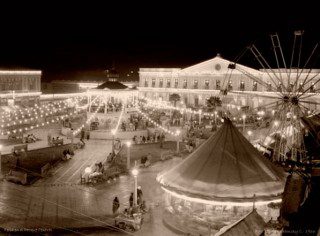
Vicente Kramsky: a local photographer
Gabriela Torres Freyermuth Vicente Kramsky was born in San Cristóbal de Las Casas, Chiapas, in 1929. His family was of German descent. His grandfather, Vicente Kramsky Bittner, arrived in Mexico in 1870 after the Mexican government had extended an invitation to foreigners to come and people the country. He soon decided to try…
-

Work Brings Us Together: Larrauri/Mexiac
On April 20, 2016, at Galería Víctor Manuel Contreras in Universidad Autónoma del Estado de Morelos (UAEM), campus Cuernavaca, the exhibition Work Brings Us Together. One More Time, was opened. It brought together two sets of works from two essential creators in the history of art and culture in Mexico: Moments in the History of…
-

SPECULAR – second series
Fictive Criticism Alfredo Gurza Invaluable images from the collections kept by Cenidiap, in dialogue with fabulations and inventions, free-style exercises of the imagination, as mirrors reflecting each other, revealing unexpected affinities and contrasts, interweavings beneath the surface, telling resonances. A proposal to re-circulate this heritage, in order to contribute to generating new audiences and strengthening…
-
SPECULAR
Fictive Criticism ALFREDO GURZA In line with Cenidiap’s essential mission to produce and foster research, documentation and information on visual arts in Mexico and the rest of the world, we present this series, where we will be periodically publishing images from the invaluable archives housed in our Center, placing them in conversation with fabulations…
-
A Memorial to Violence
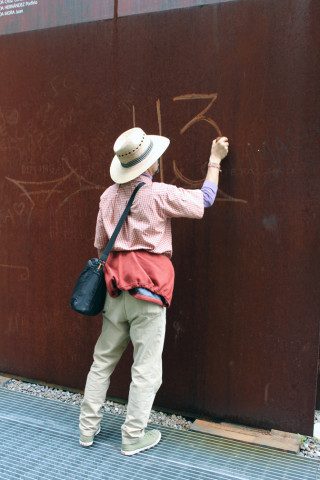
Cristina Híjar González A year after the forced disappearance of the 43 students of Normal Rural Raúl Isidro Burgos of Ayotzinapa, and the brutal murder of three others, the slogans of the day are: They took them away alive, we want them back alive! The State did it!
-

Approaches to Political Graphic Art as Discourse
In the late 1970’s, Mario Benedetti wrote the poetry collection Letras de emergencia, which included a prologue under the title “Canto libre y arte de emergencia”, [“Free Song and Emergency Art”].(1) In it, he stresses the urgent need to raise one’s voice against unreason, expressly alluding to the song by Daniel Viglietti, who was at that time a…
-
43 Times Seven Months
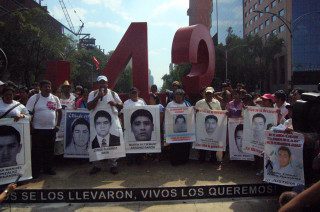
Alberto Híjar Serrano Certain that the State did it, commemorations rise up a notch, developing autonomies and self-governance. On Saturday the 25th, the Santo Domingo, Los Pedregales, neighborhood welcomed the Ayotzinapa parents, and as it has done every month for the past nine years, a survivor from the Acteal massacre, who is enduring…
-

Galeano
Alberto Híjar Serrano Open Veins of Latin America rightly replaced those linear-history manuals, centered on Nation-State building and with only veiled references to colonial and imperial outrages. Official texts never mention guerrillas and bandits: they are the dirty war, a side chapter beyond presidents and laws.
-
César Moro: Poetry between the Old and New Worlds
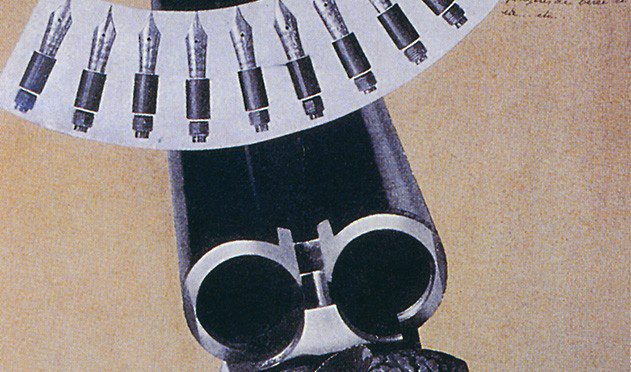
Lourdes Andrade César Moro, a poet of astonishing fertility in terms of the quantity and the quality of his images, is a figure between two worlds, drawn and torn by the absolute demands of poetry and the circumstances in which he developed his work and his life, and in which he gave sense to…