

Gaceta electrónica del Cenidiap
-

Aproximaciones a Patricia Henríquez
Alfredo Gurza La incursión en años recientes de Patricia Henríquez (ciudad de México, 1967) en la animación y el videoarte es la consecuencia lógica de su afán por extender su dominio sígnico. No deja de maravillar la tersura del tránsito al nuevo medio, la naturalidad con que lo ocupa como si fuese su…
-
Approaches to Patricia Henríquez
Alfredo Gurza The incursion of Patricia Henríquez (Mexico City, 1967) in recent years in animation and video art is the logical consequence of her efforts to extend her semiotic domain. One is amazed by the terseness of her transit into this new medium, the naturalness with which she occupies it, as if these…
-
Pola Weiss and The Crystal Door
Alberto Roblest My first encounter with Pola was as haphazard as my stay at UNAM’s Facultad de Ciencias Políticas y Sociales. Both chance events left their imprint on me forever. It was 1983, I was doing the fourth semester. It was near the end of term.
-
Pola Weiss y La puerta de cristal
Alberto Roblest Mi encuentro con Pola fue tan azaroso como mi estancia en la Facultad de Ciencias Políticas y Sociales de la UNAM; ambas casualidades me marcaron para siempre. Sería el año de 1983, yo cursaba el cuarto semestre de la carrera, estábamos por terminar el ciclo escolar.
-

José Luis Brea’s “Looking ahead”
Loreto Alonso Atienza On January 15-17, the “Three Eras of the Image” conference took place at Biblioteca Vasconcelos, in Mexico City. Organized by Centro de la Imagen and 17 Instituto de Estudios Críticos, it gathered major figures in the field of visual studies, such as Keith Moxey, William J. T Mitchell and Mieke…
-
El ver por delante de José Luis Brea
Loreto Alonso Atienza Del 15 al 17 de enero de 2015 se realizó el coloquio Las tres eras de la imagen en la Biblioteca Vasconcelos en la ciudad de México. Fue convocado por el Centro de la Imagen y 17 Instituto de Estudios Críticos, y entre los participantes estuvieron importantes representantes de los…
-
Fondo Documental de Arte Actual
Edwina Moreno Guerra 1990-2000 El Fondo Documental de Arte Actual tuvo como punto de partida el rescate del denominado Arte Joven, cuyos antecedentes remontan a la segunda mitad de la década de 1950. Desde entonces, el cultivo de los nuevos lenguajes hace mención al arte nuevo, aquel que se deslindó de la…
-
Current Art Documentary Collection
Edwina Moreno Guerra 1990-2000 The Current Art Documentary Collection began with the rescue of so-called “Arte Joven” (“Young Art”), originating in the late 1950’s. From then on, the cultivation of new languages always refers to new art, the one that broke off with tradition and was acknowledged as avant-garde.
-
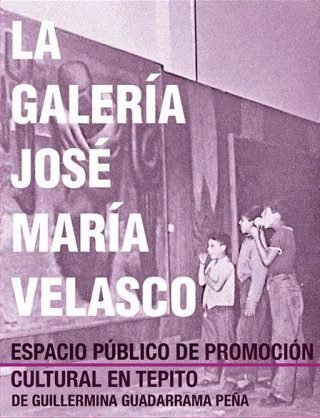
La Galería José María Velasco. Espacio público de promoción cultural en Tepito
Carlos Guevara Meza Texto leído en la presentación del Libro La Galería José María Velasco. Espacio público de promoción cultural en Tepito de Guillermina Guadarrama, México, Consejo Nacional para la Cultura y las Artes, Instituto Nacional de Bellas Artes, Galería José María Velasco, 2013. Galería Velasco.
-
The José María Velasco Gallery. A Public Space for Cultural Promotion in Tepito
Carlos Guevara Meza This text was read at the presentation of the book La Galería José María Velasco. Espacio público de promoción cultural en Tepito, by Guillermina Guadarrama, México, Consejo Nacional para la Cultura y las Artes, Instituto Nacional de Bellas Artes, Galería José María Velasco, 2013. Galería Velasco.
-
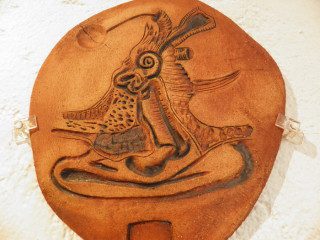
Vianney Cortés. Language as the Detonator of Form
The work of Vianney Cortés (Mexico City, 1985), who graduated from Escuela Nacional de Pintura, Escultura y Grabado La Esmeralda, fluctuates between sculpture and installation. Light and movement play a key role in her pieces, generating atmospheric and enveloping effects.
-
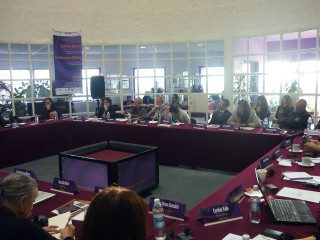
Malraux Encounter on Art and Education
Loreto Alonso Atienza The Malraux Encounter on Art and Education took place on May 6-8, 2014. It was coordinated by Patrick Talbot, honorary director of Art Postgraduate Schools of Bourges and Nancy, and of the National Higher School of Photography of France; and by Humberto Chávez Mayol, researcher at Cenidiap (National Center for Research,…
-
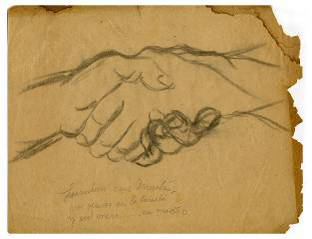
On History and Relevancy: Luis Arenal
María Elisa Morales Maya The exhibition Luis Arenal Bastar: un realismo militante (A Militant Realism) signifies in many senses, not just because of its unpublished status, given its documentary character, but because of the diversity of processes that the materialization of an exhibition such as this may imply.
-
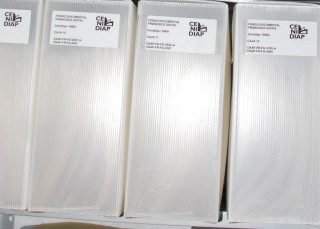
Francisco Goitia Collection
María Jeannette Méndez Ramón Since 1987, the Francisco Goitia Collection became part of the artistic documentary heritage of the National Center for Research, Documentation and Information on Visual Arts (Cenidiap). It was donated by anthropologist Farías Galindo, the last executor and biographer of the artist.
-

Economics and Culture
Carlos Guevara Meza Perhaps I should begin by pointing out the relevance of presenting a book entitled Economics and Culture at an arts research center. When “traditional” cultural producers, such as artists, intellectuals and academics, hear those two words together, we start shaking, thinking (not without reason) that the idea is to throw us into…
¿Quieres recomendar alguna exposición?